 This unit was about life and the way it's organized. Life is organized with a system of levels from general to specific. For example, there can be multiple orders in a class, and multiple classes in a phylum. Using this method, biologists can show how closely related organisms are.
 At the top, there are 3 domains. These are Archaea, Bacteria, and Eukarya. Archaeans live in extreme environments like hydrothermal vents and are prokaryotes. Bacteria are very common and live almost everywhere, including inside of us. Eukarya comprises all the "advanced" organisms that tend to have larger cells, are often multicellular, and have specialized organelles.
There are many confusing kingdoms within Archaea and Bacteria, so we focused on Eukarya.
Within Eukarya, there are the kingdoms Animalia, Fungi, Plantae, and Protista. Animals are all heterotrophic and multicellular. Fungi are all heterotrophic but vary in terms of number of cells. They are made of filaments called hyphae that absorb nutrients out of the ground. Plants are all autotrophic and multicellular. They use chloroplasts to convert sunlight, water, and CO2 into sugar, water, and O2. Protista is the "miscellaneous" category where anything that doesn't fit well in the other three kingdoms goes.
Within Animalia, there is huge variety. Phylum porifera has all the sponges which are made of unspecialized tissue and grow in a variety of shapes. Phylum cnidaria includes jellyfish, corals, anemones, and hydras that all have stinging cnidocysts. Phylum platyhelminthes is the flatworms that have a one-way gut where food comes in through the mouth/anus and goes out the same way. Phylum mollusca includes the snails, clams, and squids which share their mantle, radula, complete coelom, and ctenidia. Phylum arthropoda has segmented organisms like spiders, ants, lobsters, and trilobites whose main features are the segmented body and appendages. Phylum echinodermata, which is actually quite closely related to chordata, contains animals with radial symmetry like sea stars, brittle stars, sea urchins, sea lillies, and sea cucumbers.

My "What on Earth Evolved?" Presentation on Tiktaalik
Ancestors of modern lobe finned fish like Pandericthys gave rise to the first tetrapods. These were amphibious creatures like Tiktaalik and Icthyostega. You can learn more about how they discovered a beautiful Tiktaalik fossil at this blogpost. Soon, the sauropsids and synapsids diverged. Synapsids became modern day mammals, while sauropsids became dinosaurs, lizards & snakes, turtles, crocodilians, tuataras and birds.
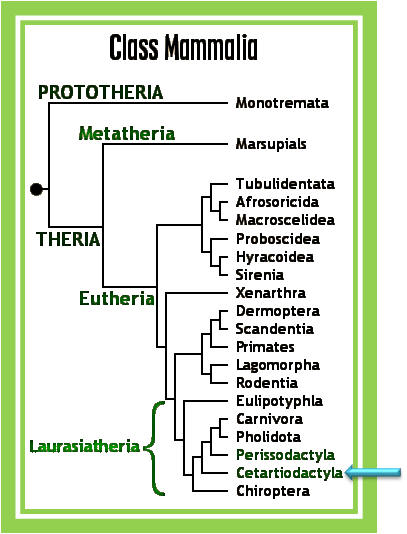 I want to learn more about the classification of birds, mammals, and snakes. I want to be able to identify the majority of common snakes and lizards as well as hopefully birds. I also wonder about better ways of classifying the organisms in Protista and would like to standardize and introduce those into state standards.
My "What on Earth Evolved?" presentation went extremely well. The prezi took me only about two hours to make and it looked really nice. I think the information on it was quite concise and the images helped show my point. Also, I only read through my presentation a few times beforehand in my mind, but still did amazing in class (I got more than a 100%). Because I was so passionate about this topic, I truly didn't have to do any memorization. I just used the bullet points as ideas for what to talk about and then elaborated.
For my upcoming TED talk, I will use prezi again because of its versatility and beauty. I will minimize the words on my slideshow to challenge myself to memorize all the main points. But overall, I actually think the TED talk will be easier. This is because I am going to talk about my experience with 20 Time, and talking about interesting things I've done has always been fun and easy for me. For the TED Talk, I will try to keep the confident and engaging tone that I used in my Tiktaalik presentation.

No comments:
Post a Comment