Friday, January 22, 2016

pGLO Lab Conclusion

1.
2. Our new bacteria have ampicillin resistance and they glow under ultraviolet light.
3. Since we have around 200 bacteria in our amp/ara/LB plate, and 150 in our amp/ara plate, and all of these took in the GFP gene, there must be at least 350 bacteria that took in the GFP gene. If the absorption rate is around 1 in 3, then there were probably around 1000 bacteria in the 100 microliter solution.
4. The purpose of arabinose is to activate the GFP gene and serve as a method of controlling the glow. If the arabinose is not present, bacteria will not produce GFP even if they have the gene.
5. GFP can be used to track the spread of bacteria with a certain trait. They are also an easy way to indicate whether an organism is genetically modified or not. GFP can be used to track the movements of certain cancers like osteosarcoma in dogs.
6. Another use of genetic engineering is to increase crop yield without spending large periods of time on breeding the perfect plant. Genetic engineering may be extremely important in the future with humanity's rising population and need for quick access to food.

The amp/ara/LB plate with bacteria fluorescing under UV light


Sunday, January 17, 2016

Candy Electrophoresis Lab Conclusion

Although none of our dyes traveled in the wrong direction or mixed colors, there were some minor differences between the reference dyes and the ones we were testing. For example, our red and orange were darker than the reference colors, whereas the reference dyes for blue and yellow were darker than ours. However, I think this can be attributed to the amount of dye we extracted from the candy. I did not find any major variance between the distance traveled by reference and test.

I think that citrus red 2 will migrate similar to the blue 1, carminic acid will go about as far as our red 40, fast green FCF should go about as far as yellow 6, and betanin will be about the same distance as yellow 5. This is my hypothesis because although they aren't the same colors and size of molecules, the order of dyes that we tested, yellow 5, yellow 6, red, blue will correspond to betanin, fast green FCF, carminic acid, and citrus red 2. In other words, although the chemicals won't go as far as the dyes (due to their size), they should order up in the way specified above.

Dog food manufacturers probably put food coloring in the dog food to entice the dogs to eat it. Most dog food does not consist of things that a dog would naturally be fed, so to get the dog to eat up, they need to use artificial flavoring, coloring and smells.

In my food I found the artificial dyes red 40, yellow 5, yellow 6, and blue 1. I also found 2 natural dyes in cereal: annato extract color, and turmeric extract color. I found most of these dyes in cereals and sauces. It surprised me that I found the exact same dyes that we tested in the lab. I then searched the dyes up and learned that they are four of the seven permitted food colorings in the US.

The 2 factors that control the distance the dye travels is the dye's size, and how long you leave the gel in the electrophoresis box. In addition, I also think that the overall charge of the dye must also play a part in the direction it travels.

The force that moves the dye through the gel is the electromagnetic force. It is propagated through the current, caused by the voltage difference from the red cathode to the black one.

The reason why smaller dyes travel farther than large molecules of dye is because of the porous nature of the gel. Because the dye is inserted into the wells, they travel through the gel rather than on top. Thus, smaller dye molecules find it easier to navigate the cave-like environment found inside the gel.

Because DNA molecules of this size are so much larger than the dyes, I expect them not to travel as far. For this reason, it is necessary to leave the electrophoresis going for longer to see a difference in the distance traveled by each molecule of DNA.


After only a couple minutes of electrophoresis

The entire apparatus

The gel as removed. References are red-blue on left, test dyes are red-blue on right.

Wednesday, January 13, 2016

Recombinant DNA Lab

Process: To produce recombinant DNA, you first need a plasmid that has some antibiotic resistance. Our plasmid was resistant to ampicillin. This plasmid is cut open by a restriction enzyme which also cuts the insulin gene out of another piece of DNA. For us finding an enzyme that did all of this was quite tedious, and unfortunately, the one that worked was the last one to try.This insulin gene that was chopped out and some of its surrounding code are inserted into the plasmid and stuck together by using the enzyme ligase. This plasmid with the insulin gene and antibiotic resistance is then inserted into a bacteria. This bacteria then replicates and passes the antibiotic resistance on to all of its offspring. Ampicillin can then be added to the petri dish to kill off all the bacteria that don't have antibiotic resistance, thus leaving only the bacteria that produce insulin.

1. In my petri dish I would only use antibiotics that I know the plasmid carried resistance for. Otherwise, I might kill off the bacteria that have the insulin gene too. I also won't use antibiotics that all the bacteria in the species are resistant too, because that wouldn't refine the types of bacteria in the dish.

2. Restriction enzymes are enzymes that cut open DNA when they read a certain sequence. They work by cutting in patterns that create "sticky ends". I used HIND III because it cut extremely close to the insulin gene on both sides, as well as cut open my plasmid in one place.

3. If my enzyme cut the plasmid in 2 locations, then once the insulin gene is inserted in, I would be left with a string of DNA rather than a loop. However, I think that if ligase is introduced, the plasmid will reconnect to itself and everything would proceed as normal.

4. This process is important in our daily lives, because bacteria are extremely useful factories for protein. Although right now the only well-known use for bacteria-produced protein is insulin, I am sure in the future, we will be using bacteria as factories for all types of materials.

5. This process could eventually actually be used for bacteria to convert things like plastic and feces into usable fuel or other goods. For example, we would first have to engineer an enzyme for the digestion of plastics. We may then have to convert this into a genetic code. The code could be produced by various DNA "printer" technologies that are being innovated today. This gene will then be spliced by a restriction enzyme that also splices open a plasmid. The process will then be repeated except with an enzyme for the construction of propane or another fuel. Once all the necessary plasmids are inserted into bacteria, we could essentially feed the colony our plastic waste, and fill our cars or propane tanks out of the other side.

The plasmid with insulin gene and ampicillin resistance


Tuesday, January 5, 2016

New Year's Goals

In the second semester of biology this year, I want to make sure I turn in all of my textbook notes and turn in my lab conclusions on time. These are the only things that I lost points on last semester, but they still had a major effect on my grade. To ensure that the textbook notes are completed on time, I will start working on them at the start of the unit rather than waiting till the last minute. Also, instead of completing the majority of my lab conclusions at home, I will use my computer time in class more wisely.

Last semester I did much better than I expected in math, but my grade could still be better. This semester I want to ensure I get at least ninety percent in Algebra 2 Honors. I will study three times a week after school every week rather than just studying on the last two nights before a test or quiz. I may also try studying with friends I have in the class.

Thursday, December 10, 2015

Unit 5 Reflection

In this unit, we learned about the central dogma of molecular biology. We studied the structure of DNA and its antiparallelness. We also learned about how the enzymes helicase and DNA polymerase are used to copy DNA. In addition to DNA, we also learned about RNA and proteins. We were taught the main types of mutations and their effects on proteins. The labs we did in this module involved extracting our own DNA and simulating the process of going from DNA to RNA to Protein.

I feel that I was able to understand the DNA copying, the Dogma, and mutations vodcasts very well. I am already familiar with the information taught in the dogma and mutations vodcast, but not the copy machine one. Although the enzymes involved in DNA replication were new to me, I think that their roles were quite basic. This probably explains why that set of vodcasts felt extremely easy. However, the gene expression vodcast was slightly tougher than the other ones. This is probably because I am not very familiar with how the operon and gene regulation work. After reviewing the diagram a couple of times though, I had a pretty good grasp of the concept.

I am glad that I learned a lot of new material in this unit. In other units, the number of new concepts were close to zero and weren't very interesting. However, the enzymes and mechanisms involved in the replication, transcription, and regulation of genes I learned about in Unit 5 were really cool. I definitely think I am a better student today than at the start of this unit. This is because for this unit, I really had to try to understand some of the concepts, compared to other areas we have learned about that I was already too familiar with to apply studying methods.

I want to learn more about the operon and gene regulation. I still have questions involving gene regulation in eukaryotes. I might research these processes for the 20 time project, but I am not sure.

For this unit, I learned more about the operon by searching up other diagrams that felt more descriptive to me. This helped because I am a multimodal learner (mostly visual and reading), and the images were labeled diagrams.


DNA floating on top of alcohol from-DNA Extraction Lab

a deletion mutation from-Protein Synthesis Lab

Tuesday, December 8, 2015

Protein Synthesis Lab Conclusion

     In order to make protein, the a gene found on DNA must me copied into mRNA (transcription). This involves RNA Polymerase, which constructs an mRNA strand complementary to the DNA sequence being scanned. Also, instead of using Thymine, RNA uses another pyrimidine: Uracil. This strand of mRNA then exits the nucleus and arrives at a ribosome (translation). Here, tRNA molecules carrying the amino acid corresponding to each codon, a set of 3 bases, connect the amino acids in the dictated order. Once the polypeptide chain has formed, it folds and gets packaged in the Golgi Apparatus. This protein is then used either inside or outside the cell for a variety of purposes.
Image result for transcription translation


     In my opinion, insertions and deletions of 1 or 2 bases at the start of a sequence and the start of a codon make the largest difference. It makes a major difference when it is 1 or 2 bases because that creates a frameshift. If 3 were inserted, then a new amino acid would be produced but the rest would remain the same. It makes a large change when at the start of the sequence because then Methionine may not be read, and all of the following codons are frameshifted. It is also important for it to be at the start of the codon, because sometimes if the base change is at the end of a codon, it may not change the amino acid that is made. The mutations that makes the least change are frameshift mutations of 3 bases, frameshift mutations near the end of a gene, and substitutions of the last base in a codon. The first one makes a small difference because if 3 are inserted/deleted, it just adds/removes an amino acid. The second mutation makes a minor difference because if the frameshift is near the end of a gene, it doesn't frameshift that many codons. Also, substitutions of the last base in a codon don't make much of a difference because often the produced amino acid is not different.
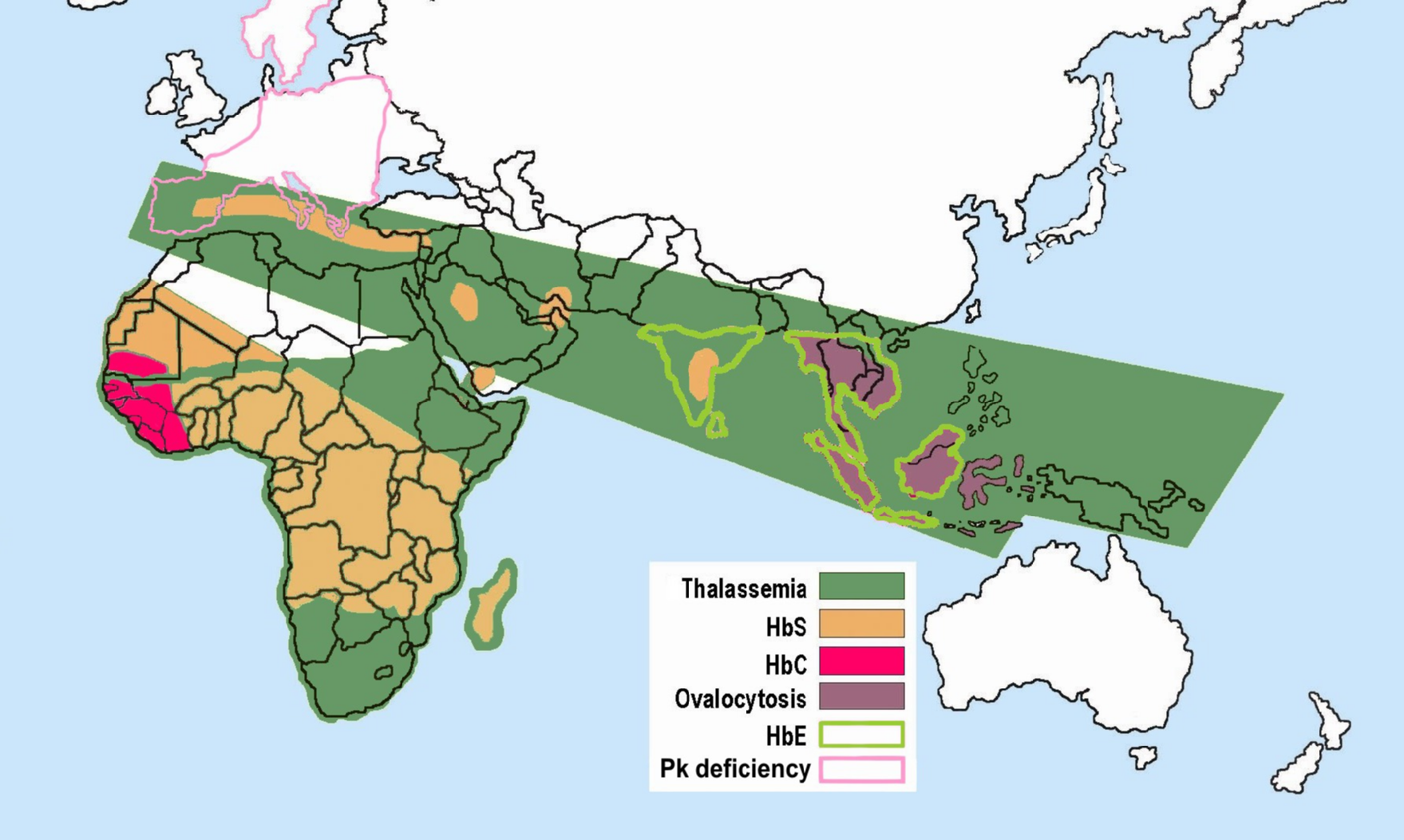
^A lot of these hemoglobin variants are caused by a single base substitution

    In step 5, I chose to make an insertion at the very start of the sequence. The result was that there was no "start" codon, and no "stop" codon. This is a drastic change from the other mutations because in step 5, no protein was produced at all. This frameshift mutation at the start of the gene shows that the location of the mutation is very important.


    If I had a severe mutation that affected an important protein like actin or collagen, I could have muscular or skin defects. These may have a major impact on my life, like preventing me from playing a sport or engaging in high physical stress activities. One mutation that affects collagen is called "Ehlers-Danlos Syndrome". It has a variety of levels, but usually causes hypermobility, stretchy skin, and slow skin healing time. These symptoms make sense because collagen is a structural fiber present in skin that gives skin its ability to stretch and compress.
Image result for ehlers danlos

Sunday, December 6, 2015

DNA Extraction Lab Conclusion

     The problem we tried to solve in this lab is, "How can DNA be removed from a cell?". DNA can be removed from cheek cells by using 3 steps: homogenization- removing and dispersing the cells in a liquid, lysis- breaking the cell membranes and other proteins down so DNA is accessible, and precipitation- using a polar liquid to get the DNA to fall out of the solution. When we used gatorade to homogenize our epithelial tissue, soap and pineapple juice to lyse that solution, and alcohol to precipitate the DNA out of the solution, we were able to extract our DNA. The DNA floated from the gatorade solution to the top of the alcohol, and we can be quite sure that it is DNA due to its stringiness and the fact that it precipitated out of the homogenization/lysis solution. The reason why this evidence verifies my claim is that I followed the exact steps outlined in the claim and found the expected result.
    Although I can't find any possible errors in this experiment, there are a couple of things that may have prevented me from getting the optimal results. One possible mistake is that I didn't scrape my cheeks enough. This may have resulted in not getting a lot of cells and consequently not much accessible DNA. I also may have used too little soap/pineapple juice. If I didn't use the right amount of soap, I may have only broken open a few cells and only received a small amount of DNA.
     The purpose of this lab was to understand the lab process of splitting open a cell to get to the DNA. The process of DNA extraction relates to how DNA copies itself. If DNA was unable to replicate itself, then there wouldn't be so many cells with so much of it. The lack of DNA would prevent us from being able to see it (and prevent us from surviving). This skill of DNA extraction may be applied to various contexts such as jobs at genetics companies or research facilities.

In this image, the yellow material at the top of the test tube is my DNA. The clear liquid beneath it is a polar liquid used for precipitation (alcohol). The yellowish liquid under that is a combination of polar liquid for homogenization (gatorade), and liquids used for lysis (soap and pineapple juice).