Saturday, April 30, 2016

My Inner Fish

"Your Inner Fish" was a video series about evolution and how long it has taken for humans to evolve on this planet. We first watched part 1, which talks about the transition from water to land. We learned about Tiktaalik, a transitional organism that scientists think is the ancestor of all tetrapods. It also showed how the human hand evolved and its relation to structures in other tetrapods. This links back to the evolution unit and homologous structures because our palms & fingers are descended from Tiktaalik's flipper-hands. 

The second video was called "Your Inner Reptile", which was about synapsids and the transition from ancient reptiles to mammals. We learned about the ancestors of mammals and how their lifestyle involved living underground, hunting/foraging during night, hiding from dinosaurs, using whiskers as a sensory organ. It also explained the master gene "EDA" which controls all the integumentary organs including hair, nails, and glands. This relates to Unit 5 because the gene EDA causes proteins to be produced and determines the location of growth for many organs.

Q7. What was the "needle in the haystack" that they were looking for in the Canadian fossils? Why was it important?
They were looking for a transitional tetrapod fossil. The organism would have to fill the gap between lobe-finned fish and the early amphibian Icthyostega. It should have an about equal amount of fish and tetrapod characteristics to be the "needle" they are looking for. The reason it is so hard to find is because the chance of an organism from almost 400 million years ago fossilizing is very low and even if you find a specimen, the chance of it being well-preserved is miniscule. Plus, the weather is pretty harsh and they don't have much time. However, you could consider it easy to find because the team was able to narrow the location down to a relatively small area.
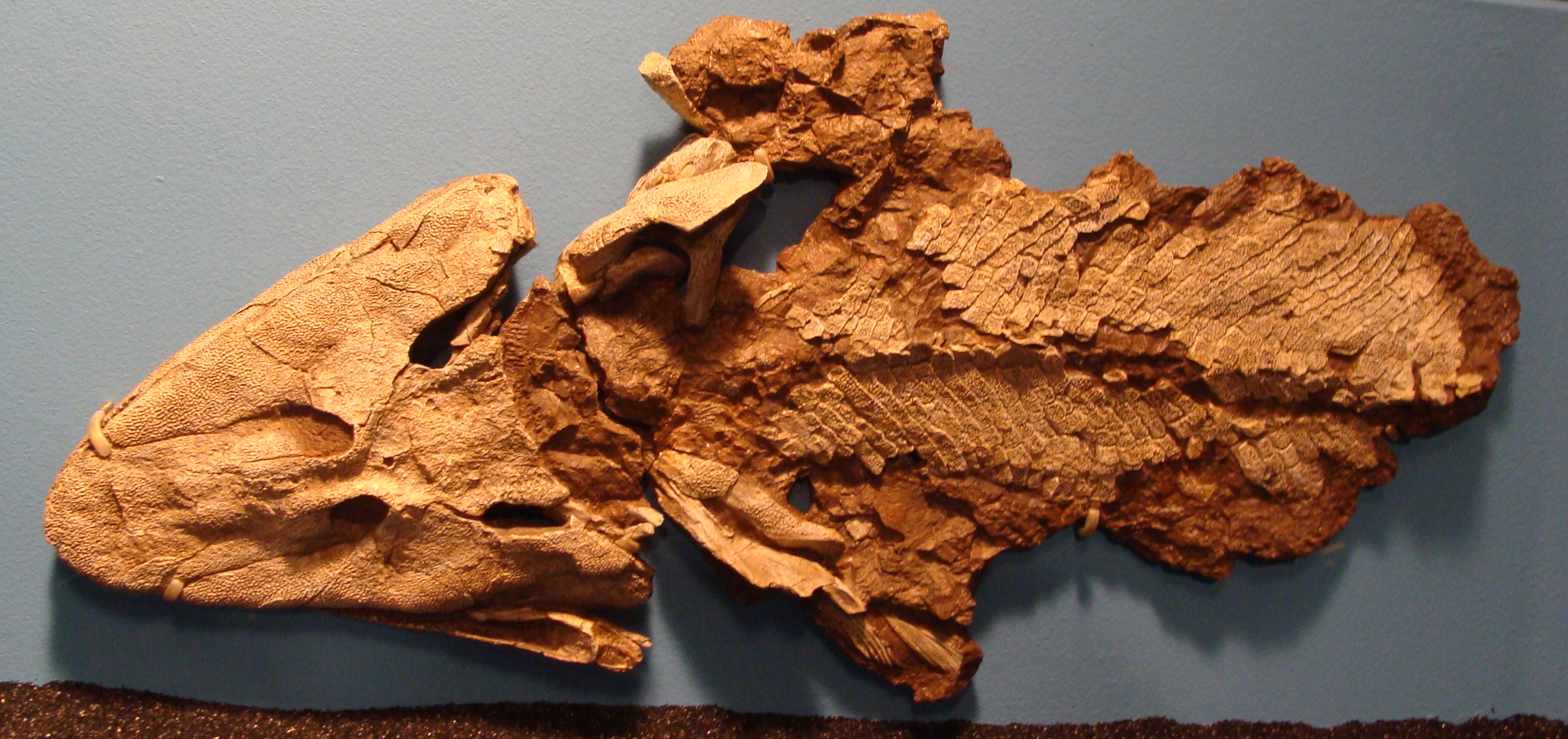
An extremely well fossilized Tiktaalik specimen
https://upload.wikimedia.org/wikipedia/commons/f/fa/Tiktaalik_Chicago.JPG

Q24. How and why did hair first evolve?
We think hair first evolved as a sensory organ in early mammals. They would have been similar to modern whiskers, except the rest of the body was just covered in bare skin or scales. But that makes me wonder what did they actually have on the rest of their body? Did they just have bare skin or did they have scales? If they had bare skin, then did mutations in the EDA gene cause whiskers to spread through the rest of their body? If they had scales, then wouldn't the scales have evolved into hairs because they are both keratinous structures? Although both ideas may involve EDA, the first one says that whiskers spread through the body and became hair, while the second posits that the body scales evolved into modern fur. If this were the case, then wouldn't the theory that early synapsids had whiskers become irrelevant to the development of modern hair?

Friday, April 15, 2016

Flatworm Penis Fighting

Flatworms are organisms that are part of the phylum Platyhelminthes. Flatworms are soft-bodied sea creatures that don't have segments and are bilaterally symmetrical. They are more advanced than Cnidarians due to their digestive tract, but less advanced than Molluscs because flatworms only have a one-way gastric passage.

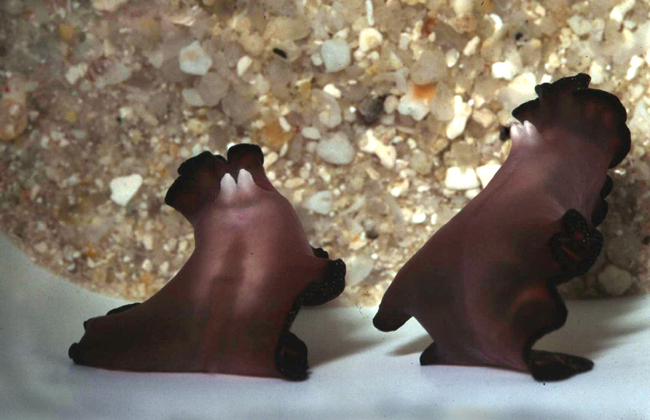
One really cool thing about flatworms are their penis fights. They are hermaphrodites, meaning each one produces both sperm and egg. When two flatworms find each other, they start a "penis fencing" duel. Each worm has to try and stab the other with its penis and the worm that is inseminated becomes the mother. Alternatively, both worms stab each other with their penises and inseminate one another. This process is known as bilateral sperm transfer and results in both worms giving birth. When the sperm exits the male's penis, it enters the haemocoel of the other worm. The haemocoel is a blood filled cavity in platyhelminths that works as their open circulatory system.


Sources:
https://en.wikipedia.org/wiki/Flatworm
https://en.wikipedia.org/wiki/Penis_fencing
https://upload.wikimedia.org/wikipedia/commons/2/2b/Mating_Pseudobiceros_bedfordi.png

Thursday, March 24, 2016

Unit 8 Reflection


This unit was about evolution and how it occurs.  Evolution is a process where mutations that are favorable for an environment become more common. This happens because organisms with favorable mutations are more likely to reproduce. We know that natural selection has occurred if there is an overall shift in the allele frequency of a population.

 In this picture, a form of selection that favors one extreme of a trait over medial and the other extreme. For example, if large claws helped a lion survive, then directional selection could occur and make large claws a common trait.

Another way we can know evolution has occurred and whether two species have a common ancestor is by looking for homologous structures. These are structures like bat wings and whale fins that have different functions but came from a common ancestor's structure.
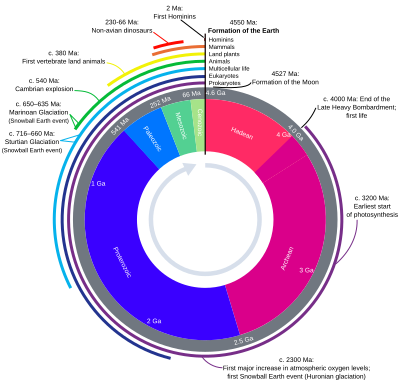
Evolution takes place over long periods of time. The earth has been around for 4.6 billion years and basic life didn't pop up until 3.8 BYA. During the Cambrian explosion, 542 MYA, most eukaryotic phylums that we are familiar with popped up. After this event, we have a mostly clear fossil record through which we can trace evolutionary paths. What is really surprising is that H. Sapiens Sapiens only evolved 200,000 years ago. This is a blink-of-an-eye ago in geologic terms, meaning that we aren't as significant as we like to think of ourselves as.

I want to learn more about the relationship between the different ways of speciation and natural selection because it is not completely clear to me yet. I'm very interested in the classification of organisms so I want to find out more about phylogenetics.

In my Unit 7 reflection, I talked about being assertive. The survey found that assertiveness is my dominant trait and aggressiveness is strong as well. In the geologic timeline project, I have been very assertive and made sure that things got done in the best & most efficient way possible.  However, I was also quite aggressive in convincing my groupmates to do what I thought was best. I was conscious of my words and actions, which allowed me to only use aggression when trying to get something done. In my next group project, I will try to be more accepting of my teammates' thoughts and ideas.


Wednesday, March 23, 2016

Geologic Timeline Individual Reflection

The first major event in Earth's history is its formation. The Earth formed around 4.6 billion years ago as a magma ball that was constantly being pummeled by meteors. Slowly, it cooled down and developed a carbon dioxide atmosphere that protected the surface from celestial objects. The formation is very significant because without it, there would be no place for life to develop in our solar system.
Another important event is the Great Oxygenation Event. The event occurred around 2.3 billion years ago because of the appearance of Cyanobacteria that converted carbon dioxide into oxygen. It is a vital event because it allowed aerobic organisms to evolve and all multicellular life depends on oxygen for survival.
A huge event in the history of our planet is the Industrial Revolution. The Industrial Revolution started about 200 years ago and created a shift from mostly manual, cottage-industry style companies to concentrated, urbanized factories that depended on fossil fuels for power. The event in part lead to our current global society and materialistic, unsustainable lives. If the industrial revolution didn't occur, we may not be as technologically advanced, but we also wouldn't be seeing spikes in CO2 levels, temperature fluctuations, extreme weather events, microplastics in our oceans, and colossal extinction rates.

The Earth's history stretches from 4.6 billion years ago to today. If we compressed the 13.8 billion years that the universe has existed into 365 days, all human history would take place in the last few seconds of the last day of December. Although I knew the geologic time scale very well before this, I had never come across this comparison. The comparison shows how small and insignificant we are as well as how many millions of years of evolution it has taken for us to develop.

In our short time on Earth, humans have caused extinctions, elevated CO2 levels, climate change, and plastic to become extremely common. I think that by devastating our environment, we are being unfair to both our ancestors and our descendants. We are being unfair to our ancestors by harming other species which we are actually quite closely related to and destroying the planet that they contributed so much energy to. Environmental issues are very detrimental to our descendants because they will have to live in a barren world and deal with the consequences of our materialism.


Image result for tiktaalik

Wednesday, March 16, 2016

Hunger Games Lab

1. In this lab, we assigned people to certain types of feeding patterns. People with the AA genotype had to pick up food (corks) with their wrists, Aa had to use their second knuckles, and aa had to use their fingers. Each round, each individual would need to have eaten a certain amount of food to reproduce and survive. If the survive, they find a mate and flip coins to choose their baby's genotype. As the experiment goes on, favorable traits reproduce more and the allele frequency changes. The experiment simulated how natural selection occurs and put together the concepts of mendelian genetics and survival of the fittest.

2. The data shows that the knucklers were the best at capturing food. However, this is most likely a result of cheating because many of the knucklers used their entire hands rather than just their knuckles.

3. The population definitely evolved. At the start, 48% of the population had "a" alleles and 52% had "A" alleles. This was pretty even and the allele frequency was very balanced at the start. However, by the end of the 8th trial, the "a" had a staggering 70% frequency while "A" only had a frequency of 30%. If evolution is a change in allele frequency over time, then a change of this scale is definitely evidence that natural selection took place.

 4. In this lab, there was a lot of other factors that affected results. Some people didn't have pockets which prevented them from gathering much food. Others weren't very fast at running or picking the corks up which prevented them from getting to the food. Many participants also cheated by not using their assigned phenotype, which allowed them to unfairly sway the results in their phenotype's favor.

5. If food was larger, then disruptive selection may take place. This is because the stumpies would be able to pick it up with their palms and the pinchers could grasp around the food with their long fingers. But the knucklers, whose phalanges can't stretch that far apart, would die off. If the corks were smaller, I would expect directional selection in which the knucklers and pinchers are favored due to their better dexterity.

6. Yes. If one allele had complete dominance over the other, then the pinchers might have become extremely rare. This would doom the population to being outcompeted by other species because only the inefficient knucklers would be common.

7. Natural selection is the mechanism, while evolution is the actual change that results from the shift in allele frequency.

8. The pinchers tended to mate with other pinchers because we knew that the "aa" phenotype tended to survive better. Also, the stumpies would try to mate with knucklers or pinchers because that would allow their child to be a knuckler. If mating choice was random, knucklers would easily become the majority phenotype.

9. In evolution, the population evolves. Natural selection acts on phenotypes, but as a result the genotype frequency changes. For example, if black fur helps with camouflage, then natural selection will cause the black fur trait to become common. But various genotypes can cause black fur and natural selection does not discriminate between those.


Sunday, March 6, 2016

Bird Beak Lab

For part 1, I hypothesized that the tweezer beak would do extremely well because it can eat a lot of food very quickly. My hypothesis was confirmed when 40% of the bird chicks had tweezer beaks. However, I overestimated how well the tweezers would do, because the binder clip came in for a close 2nd place at 33%. Because 40% of the second generation had tweezer beaks, my claim that tweezer beaks were a very useful trait is correct.

I also hypothesized that the entire population would have tweezer beaks. This did not happen over the span of 3 years that we tested, as only 40% of the chicks received tweezer beaks. However, the trend indicates that over a longer period time, the majority of the birds would have tweezer beaks and the other alleles would only be passed on through heterozygous birds. The current evidence proves my hypothesis incorrect, but a more precise and longer experiment may support my claim.

Percentage of chicks w/ each Beak (before environmental change)


When a drought occurred and wiped out all of the seed pod plants (toothpicks), I made the claim that the scissor beaked birds may not do as well due to their reliance on the seed pods. The percentage of chicks with scissor beaks decreased by 1%, indicating the scissor beaks weren't as favorable. But the percentage is definitely within the margin of error, meaning the drought made no significant difference for the scissor beaked birds. The binder clip beaked birds made 1% less chicks as well and the spoon beaked birds made 2% more chicks. Because these changes are also within the experiment's margin of error, the seed pods weren't an important food source in the ecosystem. My hypothesis is not supported by the data, but more accurate experimentation should corroborate my claim.

One error that I am pretty sure occurred is that each person has a different skill level at picking up the food. Because some people may be better at picking up the pieces than others, the results may show something that is dependent on skill rather than beak type. To fix this problem, I would rotate the beak types to each person in the table so that everyone has 3 years with each beak type. They would then find the numbers for each beak at the end of 3 years and average them out. This would make it so that every beak's numbers are altered in the same way by each person, resulting in data that isn't influenced by a group member's skill. I also think it would be more accurate if each beak type was more specialized and dependent on a single food type. For example, the scissor beaks were supposed to be affected by the absence of toothpicks, but they survived perfectly fine. Instead of scissor beaks and toothpicks, maybe it could have been done with a magnetic beak dependent on paper clips. If the paper clips were removed, it would have a much more visible effect on the birds with magnetic beaks.

The purpose of this lab was to see how environmental changes can affect the allele frequency of a population. This relates to what we have already learned because the vodcasts talked about favorable mutations and how environmental pressures select certain traits. This selection can cause a large change in the population over time. Our experiment was quite flawed because there was no real change in part 2. However, I now can apply my knowledge of incorrect experiment execution to other contexts. This is because I now know that variation in skill level can overshadow the result the experiment is trying to get to.

Percentage of chicks w/ each Beak (after environmental change)


Saturday, February 27, 2016

Ban Plastic Microbeads! (Story of Stuff Extra Credit Summary and Reflection)

The Story of Stuff video I watched was about banning plastic microbeads that take forever to decompose and are virtually impossible to clean up. Basically, companies put these microscopic pieces of plastic into cosmetics and toiletries because consumers find their texture satisfying. And because the microbeads are so small, they can’t be filtered out of the water at treatment plants. This results in the plastic ending up in the ocean, where fish and other animals mistakenly eat it, thinking that the beads are plankton. The beads also act “as a sponge for toxins” and concentrate poisonous substances that are harmful to living things. As the microbeads travel up the trophic pyramid and reach us, biomagnification occurs causing fish that we eat to have high levels of plastics and toxins.
Again, due to their small size, cleaning up is virtually impossible so prevention is the only solution. In numerous states including California, legislators are currently in the midst of passing laws that would ban the sale of products with microbeads. This doesn’t mean we won’t be able to use shampoo anymore, it just means that companies will be forced to switch to more environmentally friendly exfoliants if they want to continue selling to the 40 million people who live here.
I really liked this video because it explained what microbeads are, what their effect is, and what the solutions are, in an organized and interesting manner. They used really nice animations and were successful at portraying the large corporations as what they are: people who only care about money. However, it would have been nice if they went more into depth about topics like biomagnification and what brand lines to avoid.

I already check labels of shampoo and soap for things like parabens, pthalates, SLS and other possible carcinogens. Now I know to also look for things that are obviously plastic like polyethylene, polypropylene, and polymethyl methacrylate. By doing this, I will be voting with my dollar for environmentally friendly products. I will also feel more safe because who knows what kind of havoc plastic will wreak when it enters your body.

Watch the video here
Take action here
Watch another video about microplastics here